Home · Case study
From lead to invoice on one connected system. Here's the whole story: the logo, the product, the problem it solves, every feature, the flows behind each screen, and the design system that ties it all together.

The Autovella mark is an A formed from two ascending strokes: a climb, a rising chart, forward motion. Tucked inside its base is a small play triangle, a quiet nod to progress in motion.
The wordmark pairs a geometric mark with a clean humanist sans: confident, modern, and quietly technical.
Two strokes rising to a peak: growth, progress, and the climb every team is on.
A play mark inside the base, for software in motion and work that keeps moving forward.
A #1E5FE0 → #62A6FA gradient: clarity, dependability and digital precision.
“The work flows in a straight line. The software never did, so we built one that finally matches the work.”
Autovella started with a simple observation. The teams who sell time and expertise (agencies, consultancies, software and IT shops) run their business across five or six disconnected apps. The work flows in a straight line; the tools don't.
Every seam between those apps is a place where work leaks. A won deal gets re-typed into a project tool. Hours sit in a spreadsheet until someone reconciles them. Status reports get rebuilt by hand every week. And the one number every owner actually cares about, are we making money on this engagement?, only shows up after the month closes, far too late to change the outcome.
So we built Autovella the other way around. Instead of bolting integrations between separate products, it starts with one schema underneath everything. CRM, projects, sprints and Gantt, timesheets, attendance, expenses, invoicing and analytics all read and write the same records. A deal doesn't sync to a project; it becomes one. Logged time isn't exported to billing; it already is billing.
The result is a platform where sales, delivery, project leads and finance all see the same truth at the same moment. Pipeline, plan, capacity, margin and cash stay in sync by design, not by manual effort. Plan. Track. Achieve.
Map the lead-to-invoice lifecycle and the gaps between siloed tools.
Design a shared schema so CRM, delivery, time and billing speak one language.
A blue, calm, dense-where-needed UI system spanning 13+ modules.
Web & mobile, role-based security, automations. Plan. Track. Achieve.
For a service business, revenue flows in a line: lead → project → time → invoice. The software doesn't. Each stage lives in its own app, so people end up being the integration, re-keying records, reconciling spreadsheets, and finding money problems only after the month has closed.
It isn't a tooling gap. It's a connection gap. Every app is capable on its own; the cost hides in the spaces between them. A deal closed in the CRM means nothing to the project tool until a human retypes it. Hours approved in a timesheet mean nothing to an invoice until someone exports, reconciles and re-checks them. Each seam adds latency, errors, and a little more doubt about which number is the real one.
A CRM, a project tracker, a timesheet app, an invoicing tool and a BI dashboard, none of them in sync.
Sales wins a deal, delivery re-keys it, time lives in spreadsheets, finance chases what's billable.
Profitability surfaces weeks late, long after you could have saved a project that's already slipping.
Status updates, re-entry and reconciliation eat the hours that should have been billed.
How might we connect the entire service-delivery lifecycle on one data model, without overwhelming the people who use it every day?
The same eight things every service team does, and how the experience changes once the platform becomes the integration.
Every module writes to one shared data model, so the moment work happens it shows up everywhere. Pipeline, plan, timesheet, invoice and report stay in sync by design, not by manual effort.
Won deal → scoped project → logged time → invoice. The same record carries through, zero re-keying.
Margin, utilization and status update the instant work changes, while you can still act on them.
Dense capability, calm UI. Progressive disclosure keeps complex workflows learnable.
A real product film of the live platform. Every few seconds you see another part of Autovella, from dashboard to invoice.
A real 1080p product film, rendered from the live platform.
13+ native modules on a single data model. Here are the ones teams live in every day, followed by everything else that ships in the box.
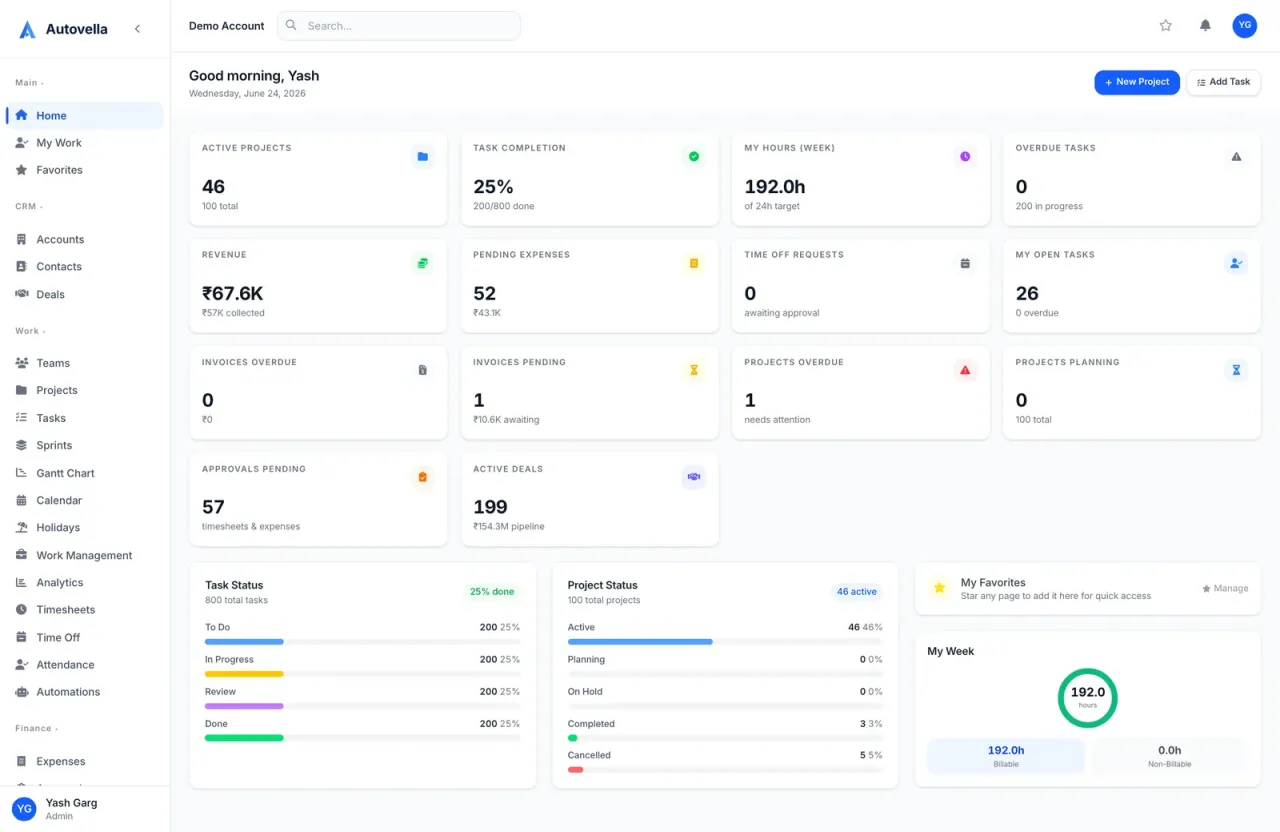
Projects, tasks, time, pipeline and cash in a single role-aware home, where every headline number drills into the work behind it.

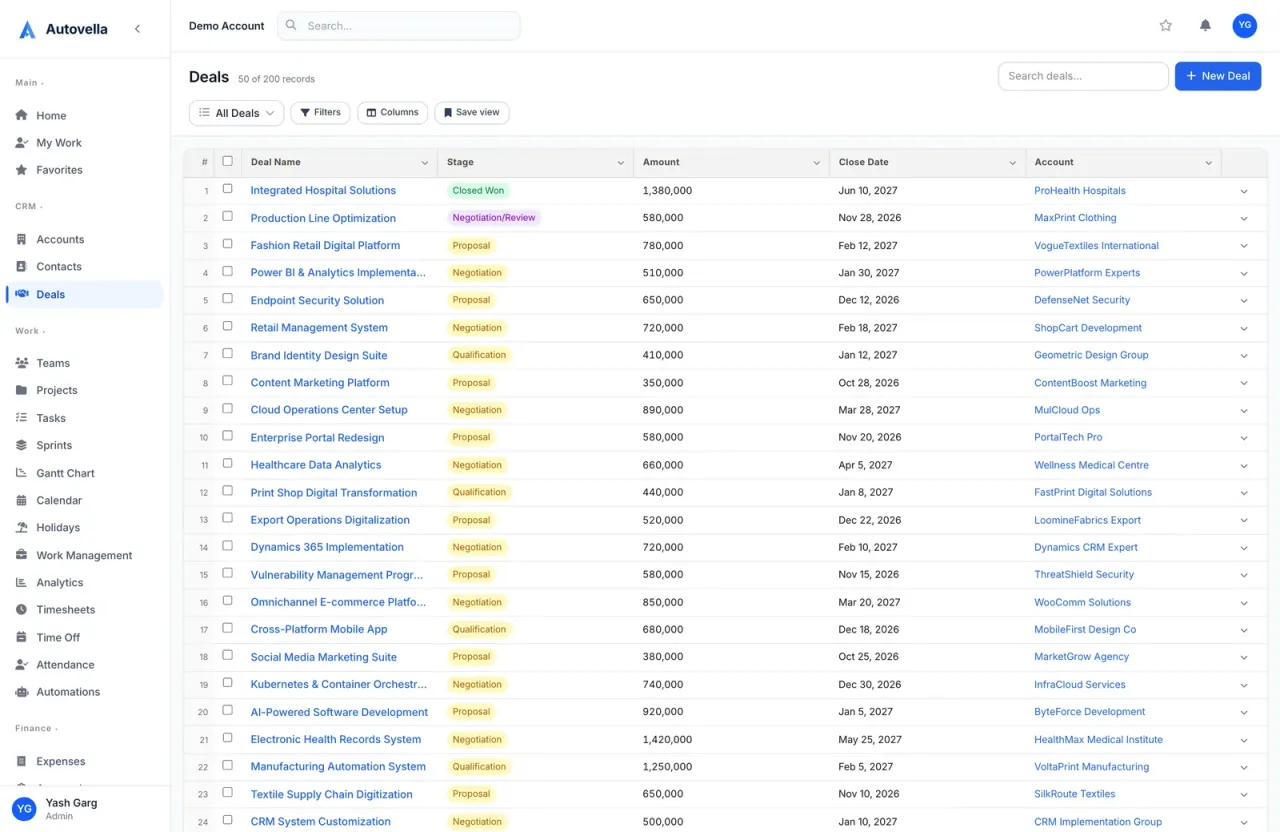
Track deals by stage, value and probability, then turn a won deal into a scoped project in one click.

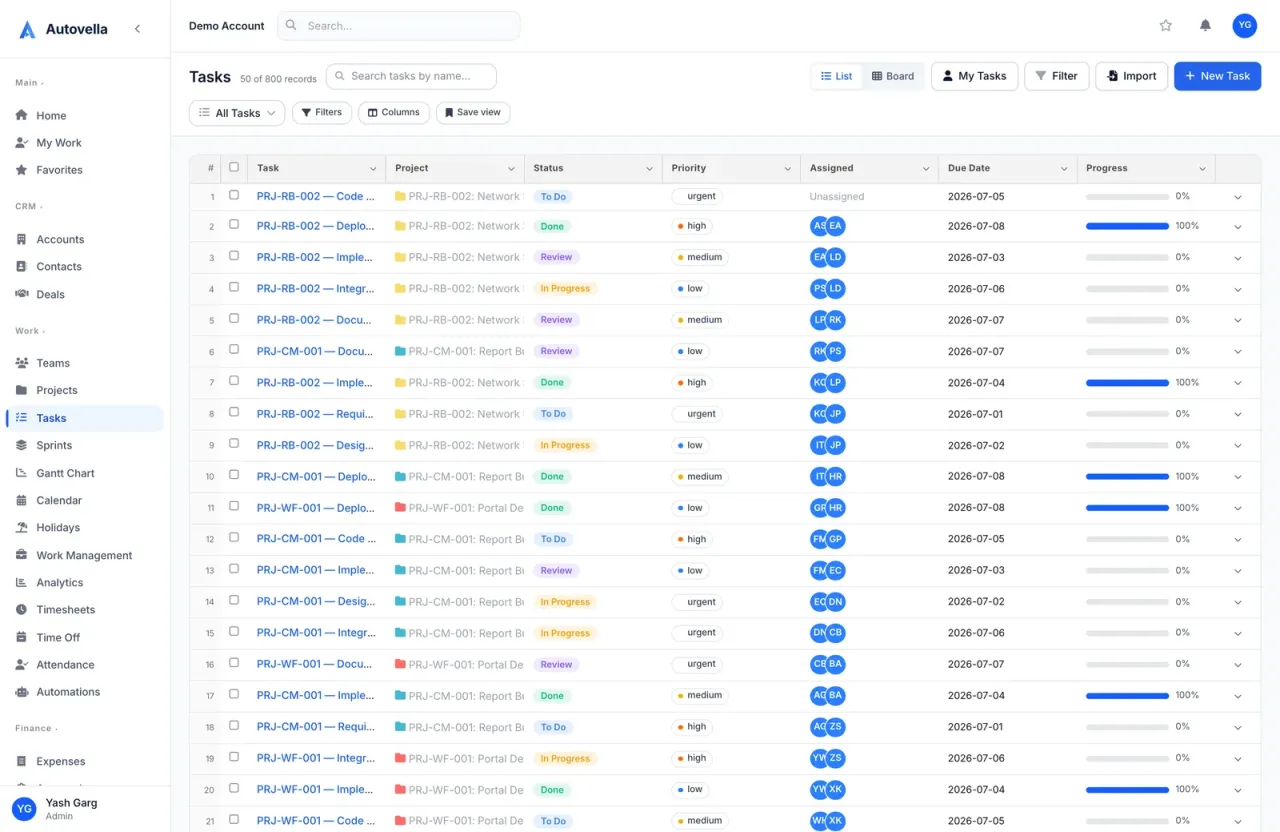
Board, list, calendar and timeline over the same data, with subtasks, dependencies, custom fields and saved views.

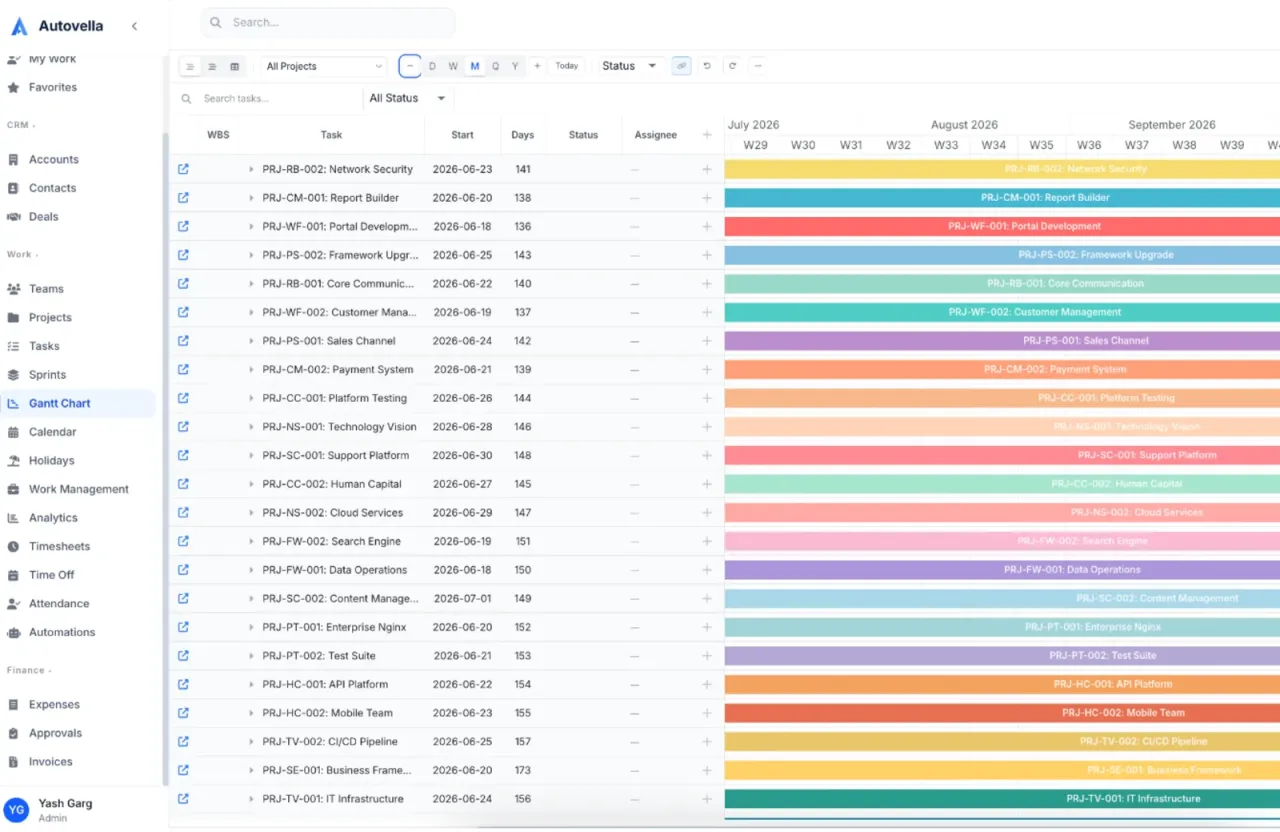
Gantt timelines with dependencies and milestones make the critical path obvious. Drag to reschedule and the downstream work follows.

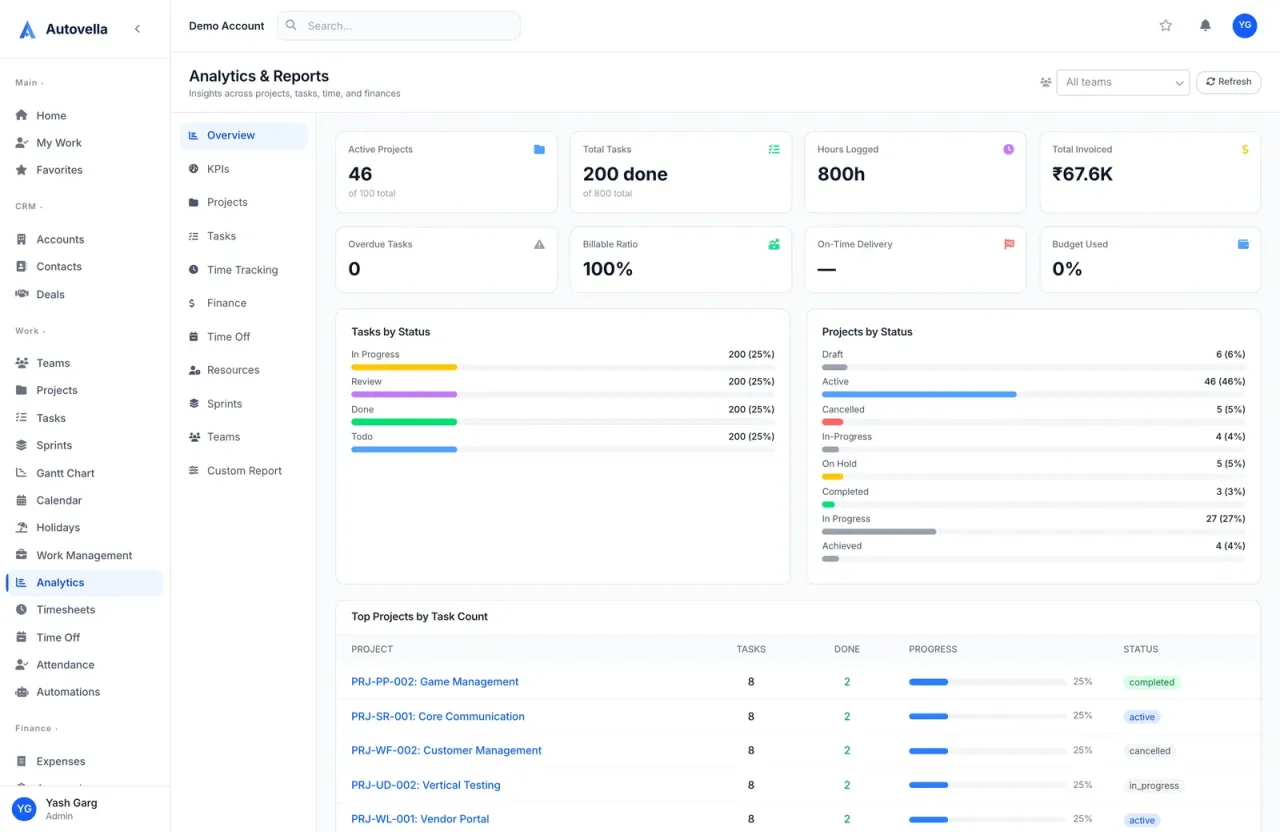
Margin, utilization, earned-value and schedule performance update as work happens, so you catch erosion while you can still act.

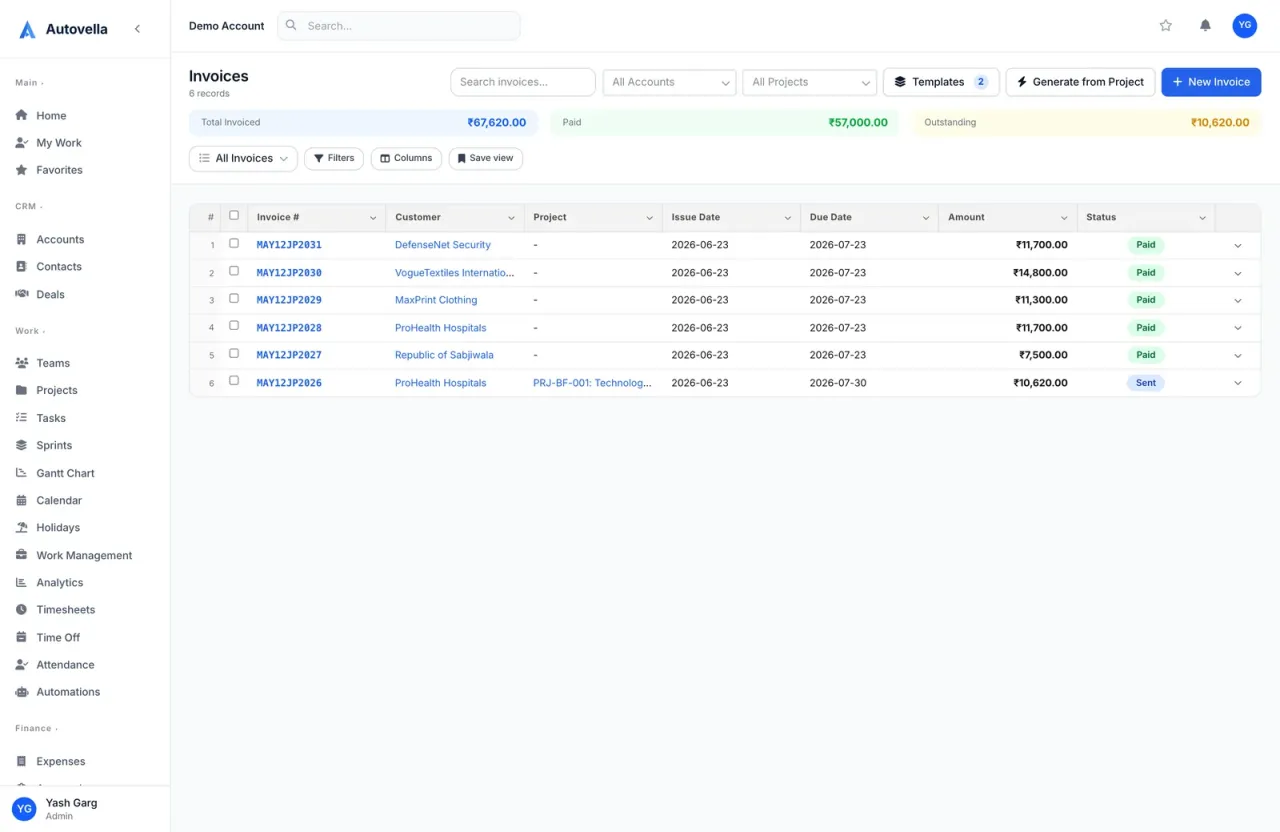
Generate multi-currency invoices straight from logged time and milestones; track billable, billed, paid and overdue.

All 13+ modules, each native to the platform.

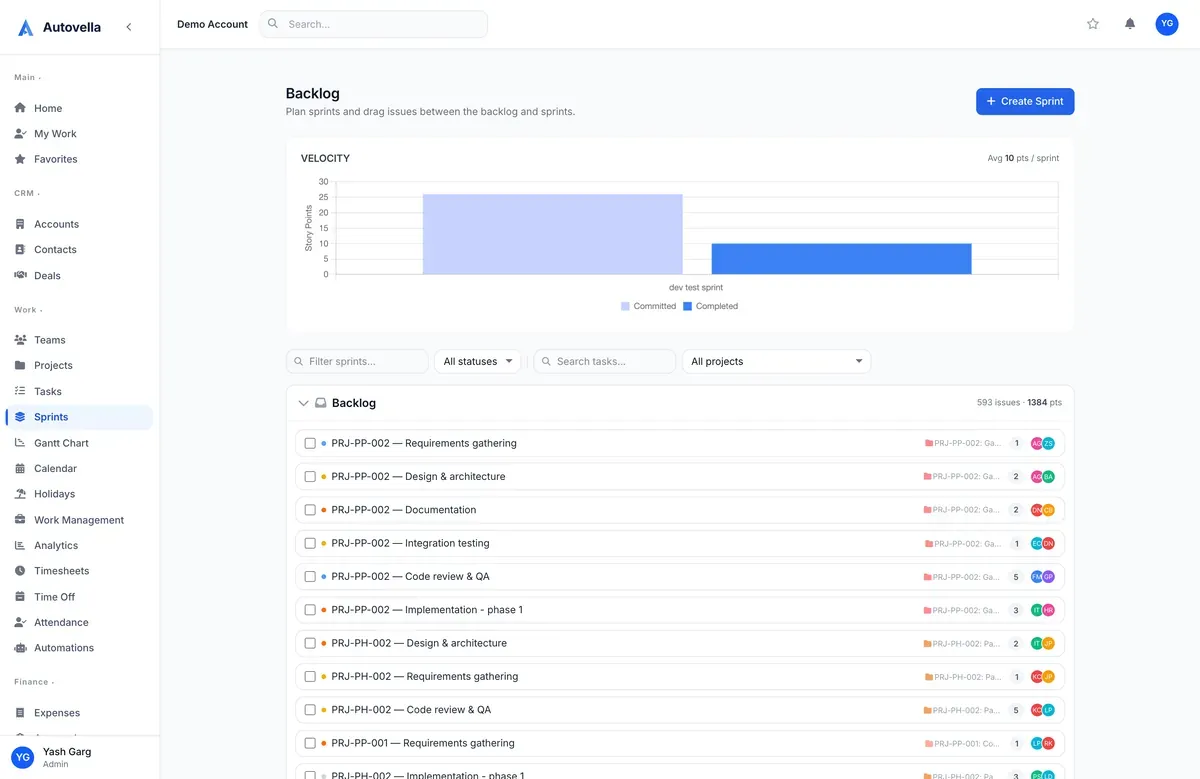
Run agile delivery on the same records as everything else.

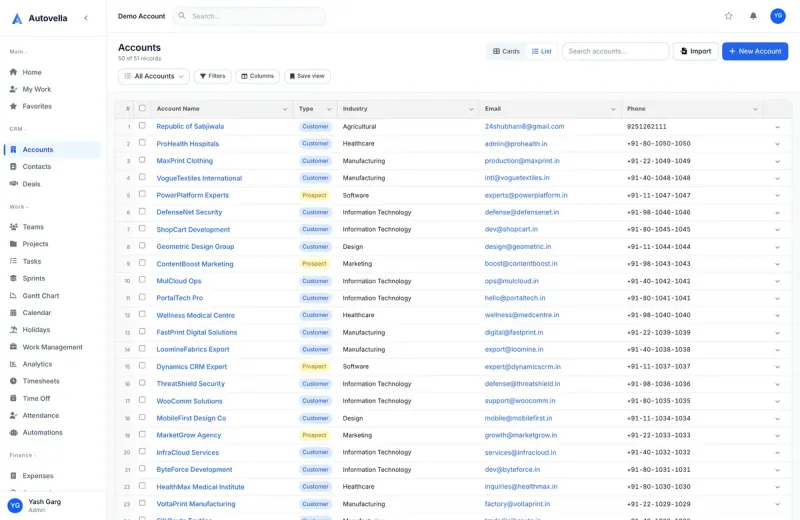
Company records that tie sales, delivery and billing together.

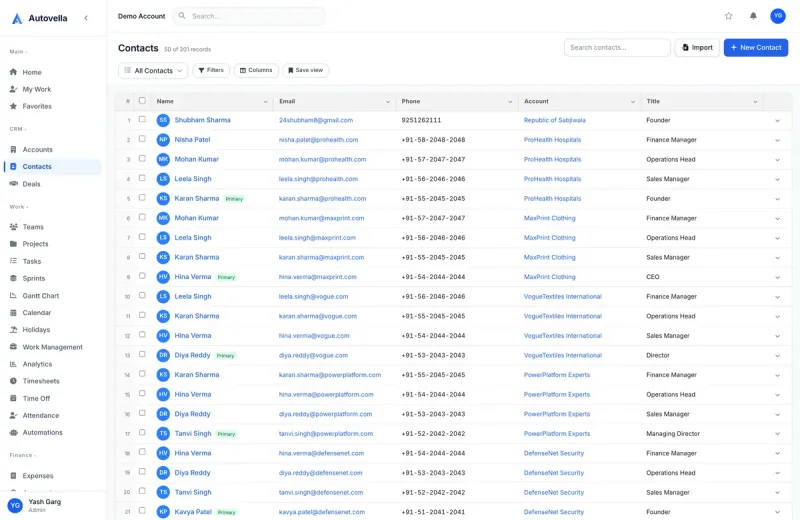
The people behind every account, in one address book.

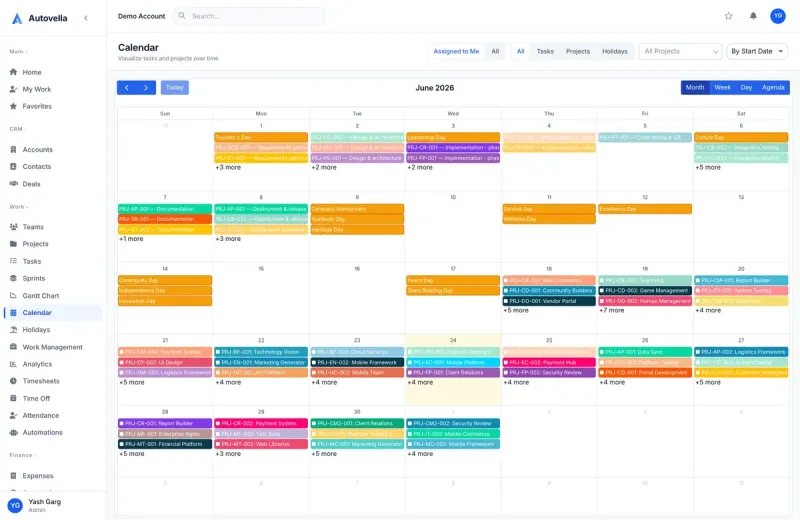
Deadlines, milestones and capacity on one timeline.

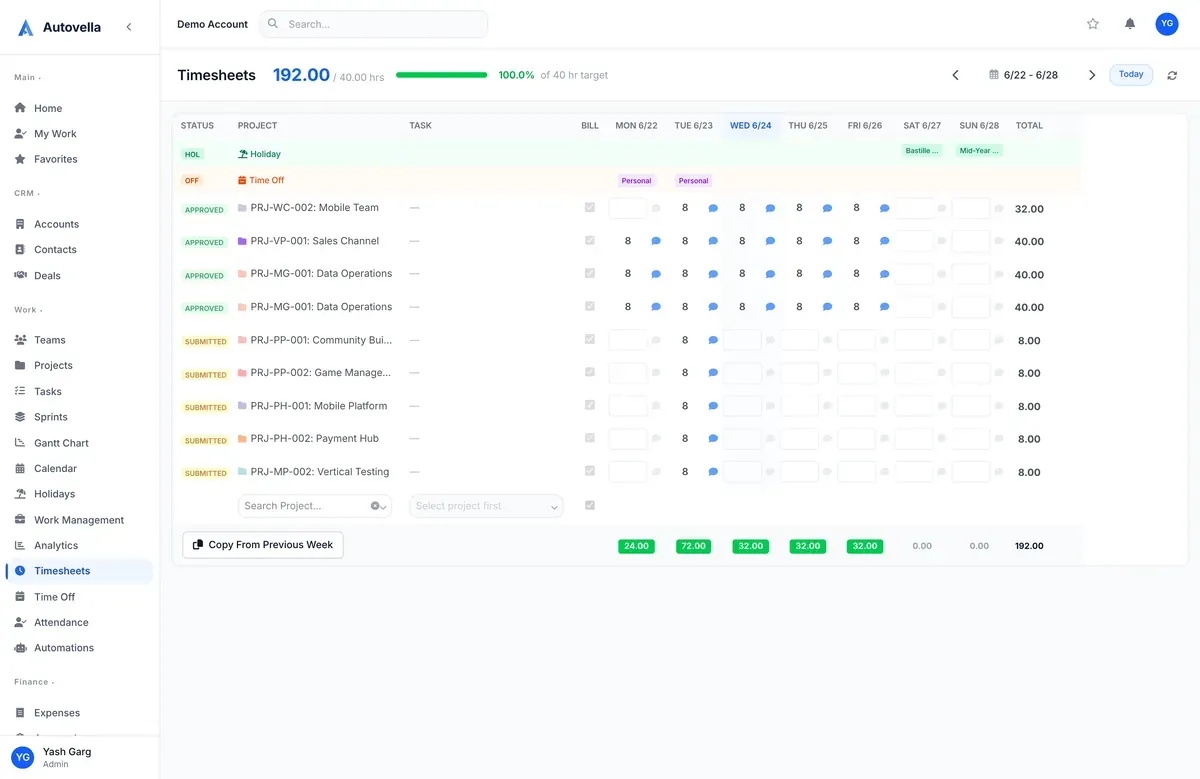
Billable time logged straight onto tasks and projects.

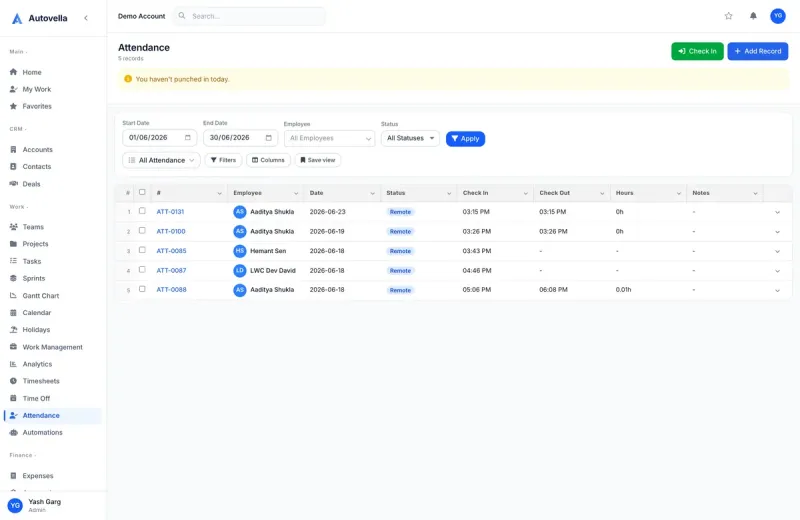
Presence tracking that lives beside the work itself.

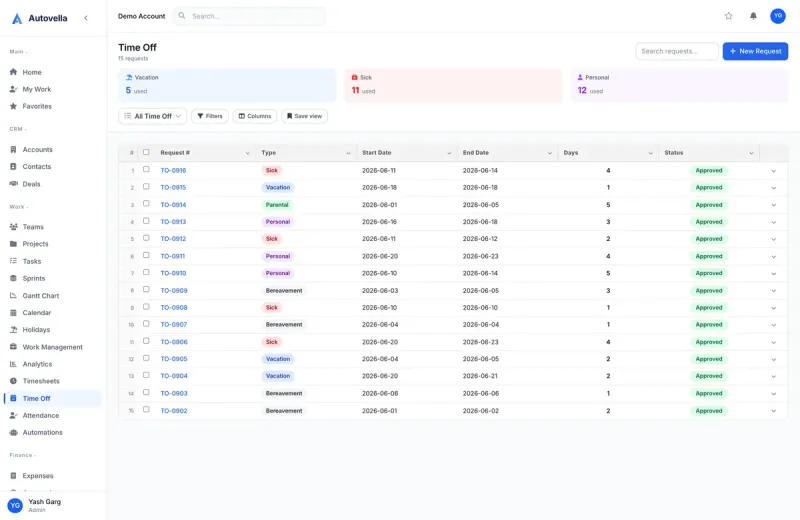
Leave that the whole plan understands automatically.

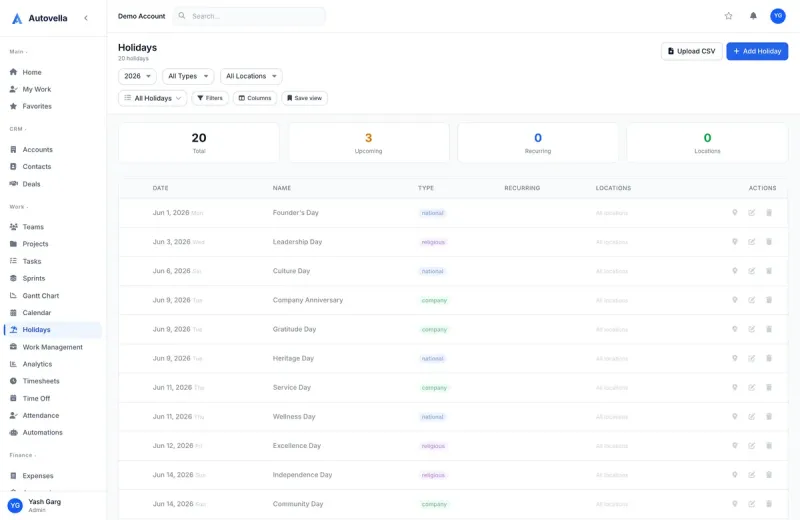
Company and regional calendars that planning respects.

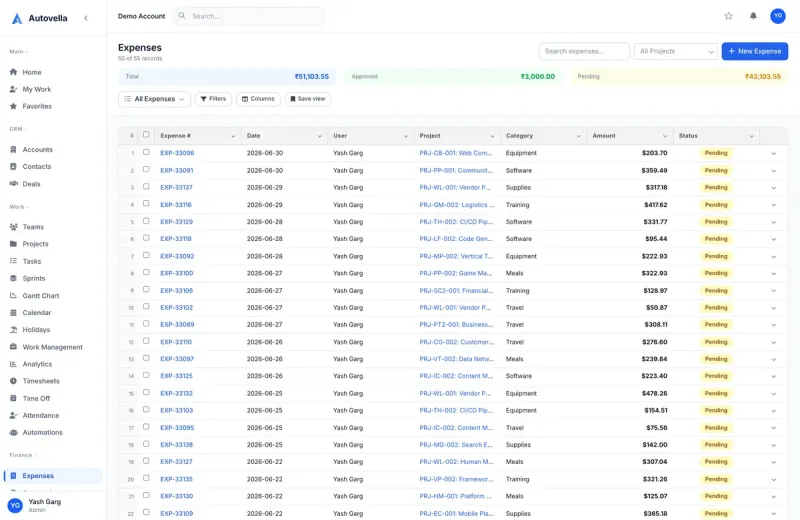
Cost captured against the project margin it affects.

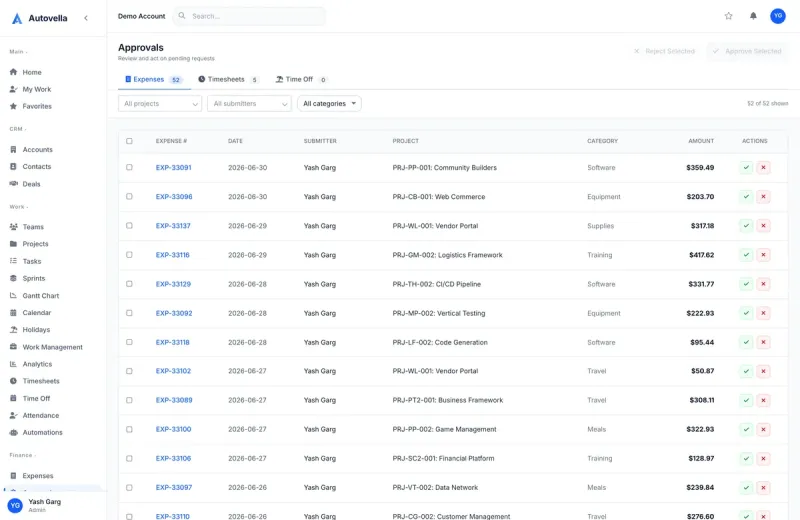
One queue for everything that needs a sign-off.

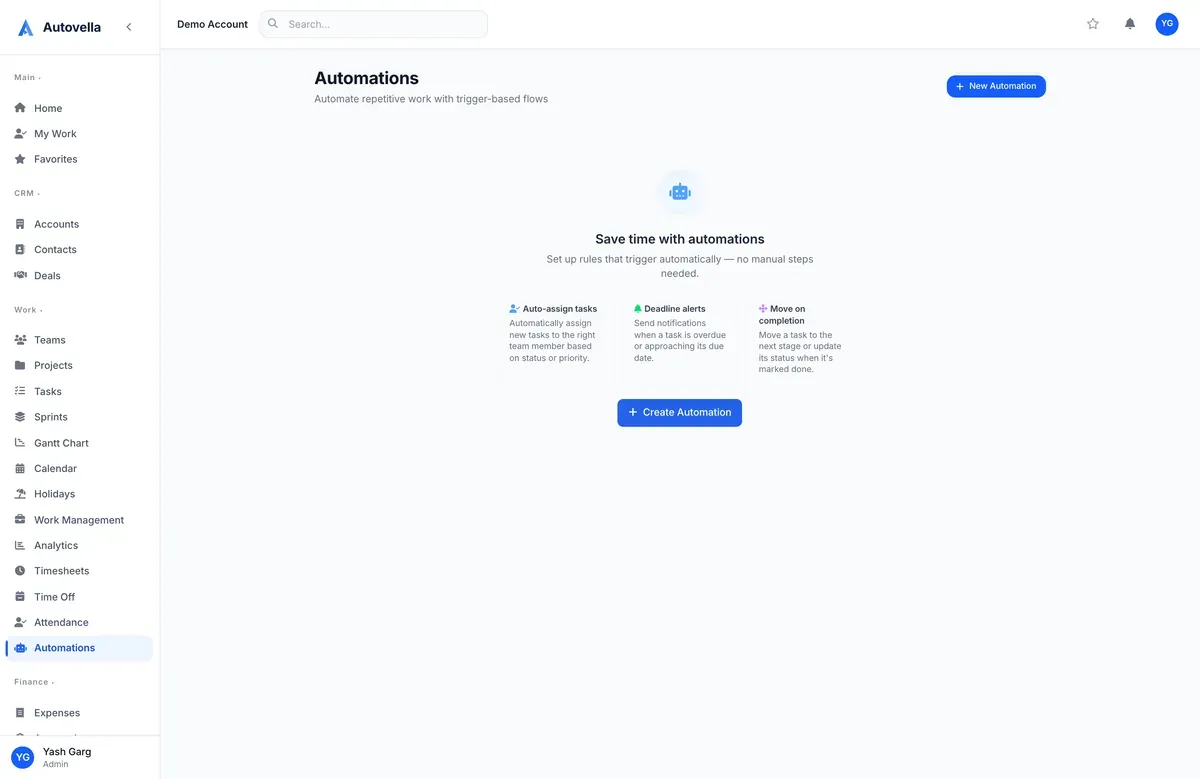
Trigger-based rules that move work without you.

Granular, field-level control over who sees what.
Reusable playbooks so every engagement starts right.
Turn conversations into tracked, attached work.
Quote, bill and report across borders cleanly.
Enterprise controls underneath every module.
From the master lifecycle down to a single task, these are the connected paths that make it feel like one system.
The revenue lifecycle, lead to invoice, as one continuous record
Sign-in to action
States a task moves through
Won deal to billed, closed engagement
Pipeline stages & outcomes
Logged time to paid
Live figures from an Autovella workspace, the kind of insight the platform surfaces automatically.
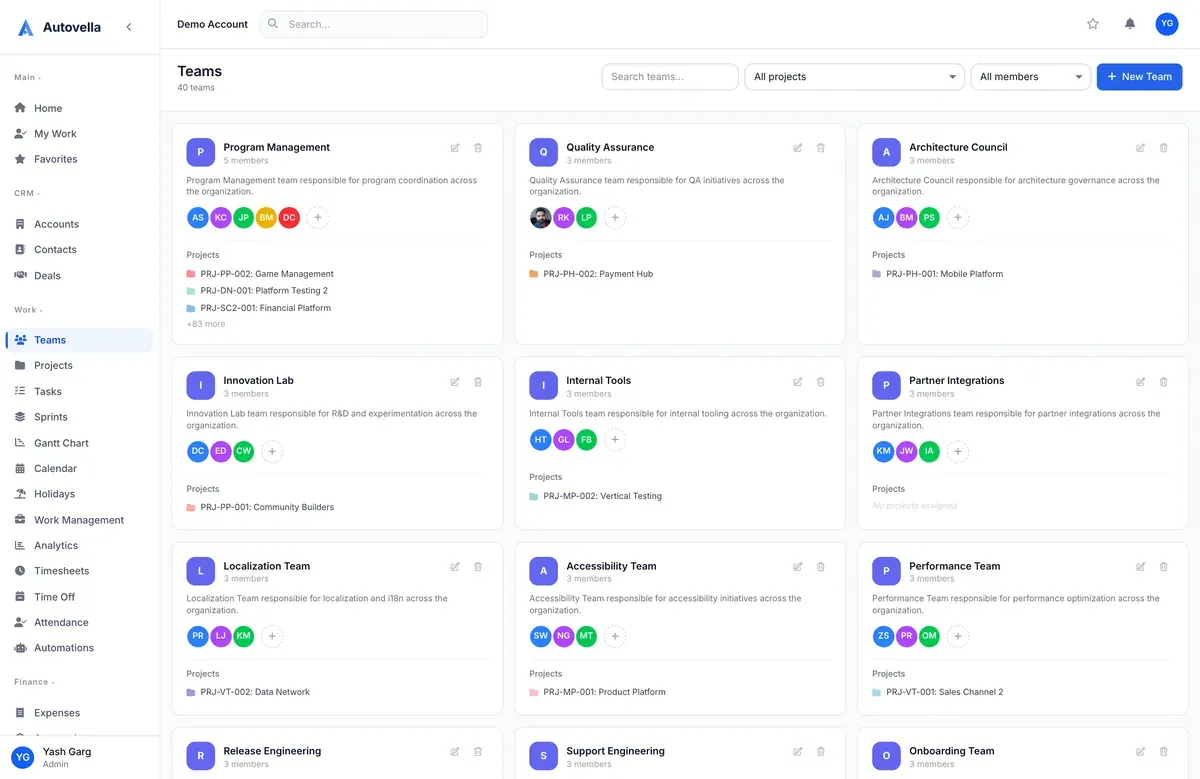
A flat, predictable structure grouped by intent, so people always know where work, clients, money and people live.
The day-to-day work surface, all on one timeline.
Pipeline and the people behind every deal.
Hours and cost flowing straight into billing.
The controls that keep the workspace humming.
A focused blue palette and one type scale keep 13+ modules feeling like one product: calm, dense where it needs to be, never noisy.
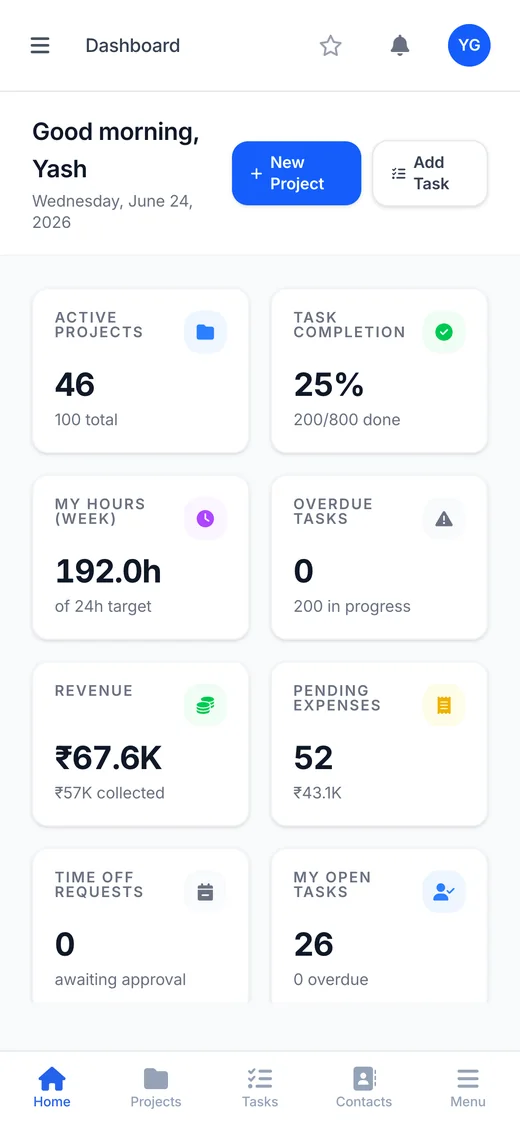
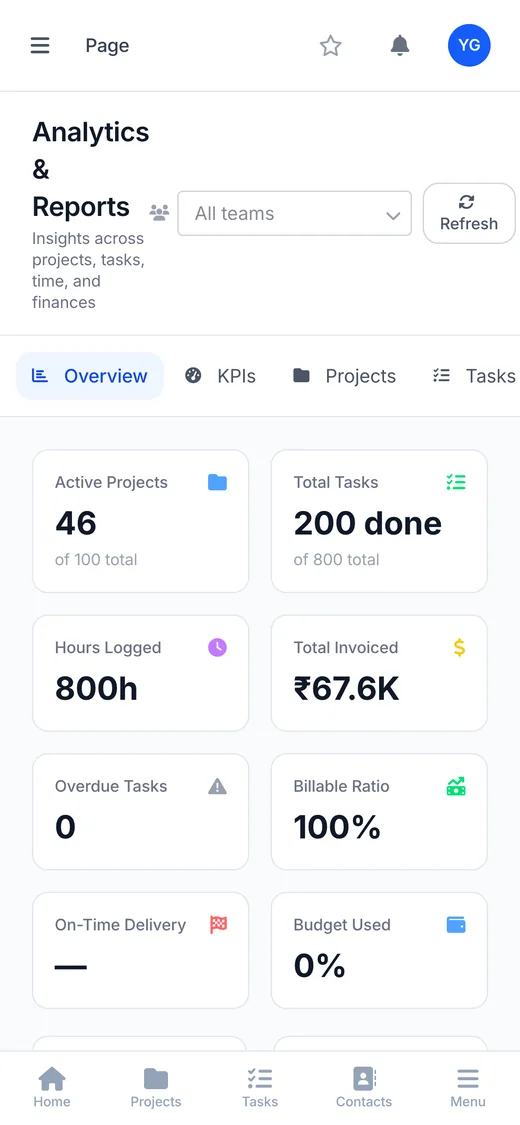
The same connected data, tailored to the device: card layouts, a bottom tab bar and touch-first controls.
A research-led process: understand the lifecycle, model the data once, then design a system that scales across every module, on web and mobile.
Interviewed service teams, mapped the lead-to-invoice lifecycle, and located every gap between siloed tools.
Designed one shared schema so CRM, delivery, time and billing reference the same records, the backbone of the product.
Grouped 13+ modules by intent (Home, CRM, Work, People, Finance) into a flat, predictable structure.
Built a blue, token-driven UI kit: color, type, spacing, components, so every module feels like one product.
Designed and tested the core flows (deal→project, task lifecycle, time→invoice) before building.
Responsive web and mobile, role-based field-level security, automations and real-time analytics, shipped in 2026.
A live Autovella workspace running the full lifecycle on one platform.
Screens captured from a live Autovella workspace. Figures reflect that workspace's data and illustrate platform scale, not a specific customer outcome.
Autovella brings the whole service-delivery lifecycle onto a single, well-designed platform, from lead to invoice. See it on your own work.